
 |
| For a long time I've meant to replace the handle of this galley sink drain thru-hull valve. I finally got to it, only to have the bolt shear off when I tried to loosen it. Now I'm going to replace the entire valve--at anchor. |
And I’ve not been around to enjoy any of it.
Today is the end of my sixth day working myself
to the bone aboard Del Viento, tackling two nagging, toxic, and disruptive jobs
that can be done only when we aren’t living aboard:
-
To explore the consequences of a poorly-bedded galley sink
- To paint the interior
The destruction phase of the first job went
swimmingly, but revealed significant problems. Once all the rusted,
impossible-to-reach wing nuts that held the sink in place gave up their grasp, a
two-foot section of sodden, thirty-six-year-old plywood countertop fell away. Fortunately,
the support structure underneath was soaked but remarkably sound, made of solid
teak. Once it dried, I replaced the missing countertop with some scrap plywood
that I epoxied in like nobody’s business. I used the regular West System stuff
for adhesion and then all around the edges, thickened G-flex epoxy to create a
flexible, impenetrable water barrier. Nobody will ever have to do this job
again.
I also cleaned the sink until it shines like
new, bought a replacement faucet, relocated our water tank vent, installed a
new salt water tap, replaced hoses, sanded and re-varnished the soap dispenser,
removed the remaining backsplash tiles, skim-coated the bulkhead behind the
sink with epoxy, and painted the inside of this cabinet space the bilge below
it.
 |
| Here where things were on Day 4: sink and tiles removed, rotten wood removed, new plywood partially epoxied in place, and cabinet interior and bilge area underneath covered in a first coat of paint. |
The second job is a monster. Using an
electric sander on the interior of your boat that’s filled with all your stuff requires
the kind of logistical preparation that nations undertake before going to war.
The dust is fine and will go anyplace that isn’t sealed and on everything that
isn’t stowed and protected. So having relocated and sealed everything, I’ve spent
all my days down below, breathing Darth Vader-like through my respirator and immersed
in clouds of either sanding dust or fumes from single-part polyurethane paint or
two-part epoxy.
The areas I’ve finished so far took three
coats, and most were painted before. The bright white that’s replaced the dingy
gray is startlingly pretty. But a few of the areas I’m painting have always
been a dark teak finish and it was a bit nerve-wracking to commit paint to
those surfaces—it can never be undone, what if it looks terrible? Fortunately,
I can see already that this was a good choice. Our boat is heavy on the wood
below—and we both like this—but the visual relief offered by these small,
now-white areas, is welcome.
I’ll have more pictures when this work is
done. I can see now that I’m going to need all six of my remaining days.
--MR
 |
| Here is the sodden portion of plywood counter top. It had the rigidity of a wet sponge. |
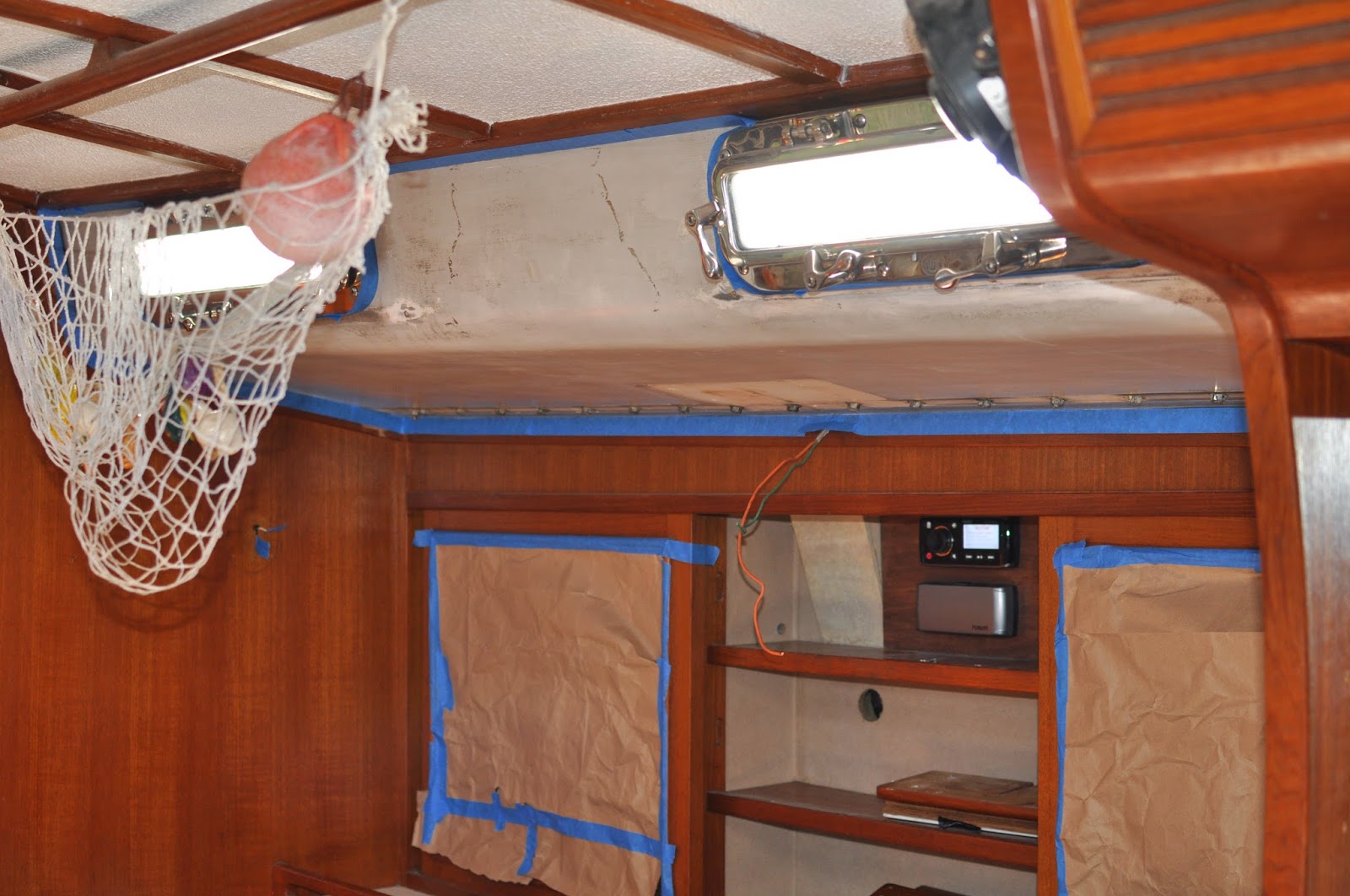 |
| This is a before shot of one of several such areas around the port lights that I'm painting. This photo doesn't do the drabness justice. |


